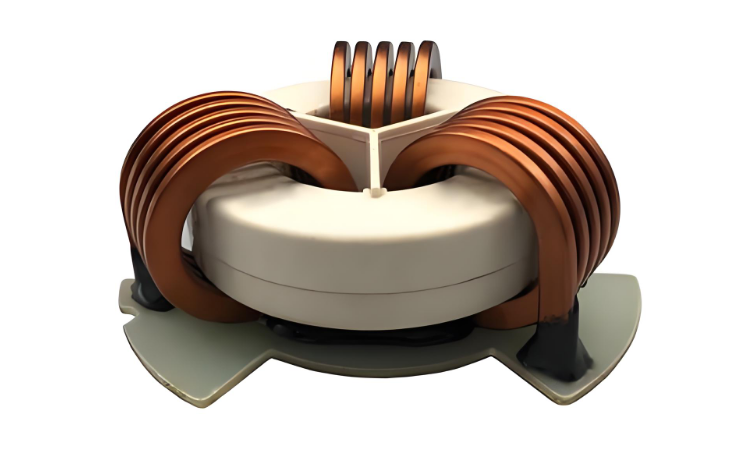
Product Introduction
1. Material Selection & Pre-Treatment
Core material: Use high-saturation flux materials (e.g., ferrite, nanocrystalline) to prevent core saturation under high current.
Wire & insulation: Select voltage-rated wires (e.g., double glass-fiber wrapped) and compatible adhesives to avoid insulation failure.
2. Winding Process
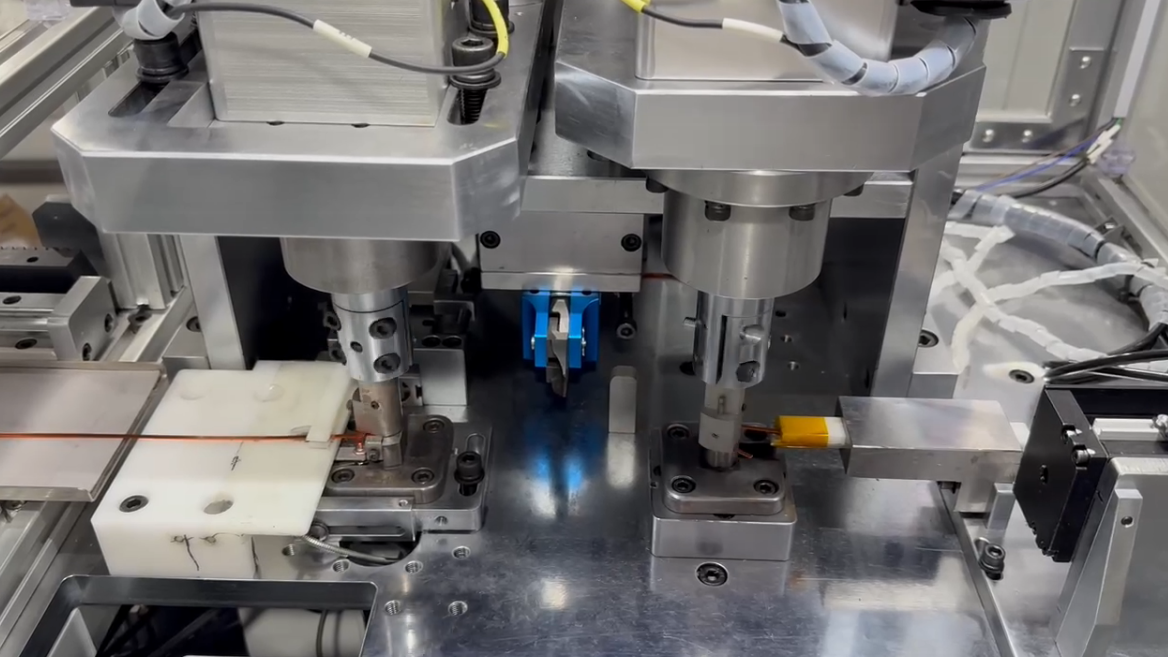
Symmetry: Limit turns error to ±0.5% (use automated winding machines + turn counters).
Tension control: Maintain 30-50% of wire’s yield strength to avoid deformation.
Layering: Prioritize single-layer winding to reduce parasitic capacitance; add insulation between multi-layer segments.
3. Insulation & Curing
Inter-turn insulation: Apply ≥0.1mm polyester film between layers; use double insulation + varnish impregnation for high voltage.
Curing: Match temperature to material class (e.g., Class F: 155°C, ≥2hrs) for full penetration and bubble-free results.
4. Structural Design & Testing
Tolerances: Keep linear dimensions within ±1mm, angles ≤2° to prevent assembly damage.
Testing:
Voltage withstand: 2.5kV/60s + inter-turn short-circuit test.
Impedance balance: ≤5% deviation between phases; validate via impedance-frequency curve (focus on CMRR and DM attenuation).
5. Environment & QC
Workspace: Maintain 15-25°C, ≤60% humidity to prevent oxidation/moisture.
Inspection: Full parameter check for first-piece; batch sampling via weight comparison.
This streamlined approach ensures consistent quality, EMC compliance, and long-term reliability.


 Follow Us