


How to judge the quality of a flat coil?
2025-04-09(503)
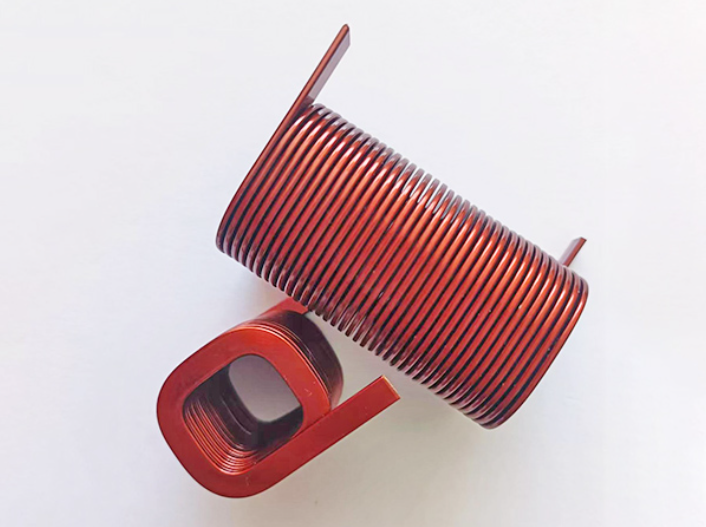
To judge the quality of a flat coil, you can start from the following aspects.
Appearance Inspection
Coil Shape: A high-quality flat coil has a regular shape, a clear outline, and there is no deformation, distortion, or skew. For example, on an automated production line, visual inspection equipment can quickly detect whether the shape of the coil meets the standards.
Winding Uniformity: The winding should be closely and evenly wound on the bobbin without issues such as looseness, skipping wires, or overlapping wires. Take a small hand-wound flat coil as an example. If the winding is uneven, it will affect the magnetic field distribution and, in turn, the performance of the coil.
Surface Quality: The surface of the coil should be smooth without scratches, damage, burrs, and other defects. The insulation layer should be complete, free of air bubbles, and not peeling off. If damage to the insulation layer is found, it may lead to a short circuit of the coil and reduce its insulation performance.
Electrical Performance Testing
Inductance Value: Use a professional inductance tester to measure the inductance value of the coil, and the result should be within the tolerance range specified in the product specification sheet. For example, for a flat coil with a nominal inductance value of 10μH and an allowable tolerance range of ±5%, the actual measured value should be between 9.5μH and 10.5μH.
DC Resistance: Use a DC resistance tester to measure the DC resistance of the coil, and the resistance value should meet the design requirements. If the DC resistance is too large, it will cause the coil to heat up severely during operation and reduce the efficiency.
Insulation Resistance: Use an insulation resistance tester to test the insulation resistance between the coil and the bobbin, as well as between the windings. The insulation resistance should be large enough, generally required to be above the megohm level. A low insulation resistance may cause safety hazards such as leakage and short circuits.
Self-resonant Frequency: For flat coils used in high-frequency applications, equipment such as a network analyzer is required to measure their self-resonant frequency, which should be consistent with the design value to ensure stable performance during high-frequency operation.
Material Analysis
Conductor Material: Determine whether the conductor material is high-purity copper, aluminum, etc. through methods such as spectral analysis and chemical composition detection. High material purity can ensure good electrical conductivity and low resistance. For example, high-purity oxygen-free copper conductors have higher conductivity, which can effectively reduce the power loss of the coil.
Insulation Material: Check whether the type and performance of the insulation material meet the requirements, such as insulation strength and high-temperature resistance. The insulation material can be tested through methods such as thermogravimetric analysis and insulation strength tests. For example, polyimide film, as an insulation material, has the characteristics of high temperature resistance and high strength and is suitable for flat coils in high-temperature environments.
Performance Testing
Temperature Characteristics: Place the coil in different temperature environments and measure the changes in parameters such as its inductance value and resistance value. For high-quality coils, the changes in performance parameters are small within the specified operating temperature range. For example, in a high-temperature environment, if the inductance value of the coil drops too much, it will affect its normal operation in high-temperature equipment.
Dielectric Withstand Voltage: Apply a certain high voltage to the coil and check whether it can withstand it without phenomena such as breakdown and flashover. Generally, the dielectric withstand voltage test is carried out according to relevant standards, such as applying the specified voltage for a certain period of time and observing whether there are any abnormalities in the coil.
Electromagnetic Compatibility: Test the performance of the coil in an electromagnetic interference environment or detect its degree of electromagnetic interference to the outside world. For some electronic devices with high requirements for electromagnetic compatibility, such as medical devices and avionics equipment, the electromagnetic compatibility of flat coils is crucial and needs to be detected through professional electromagnetic compatibility testing equipment.
Latest News
-
How to judge the quality of a flat coil?
To judge the quality of a ...
-

Automated Processing of Special Flat Coils: A New Engine Driving Industrial Upgrading
In the wave of the rapid d...