


Introduction to Metal Stamping and Related Knowledge
2025-03-19(1521)
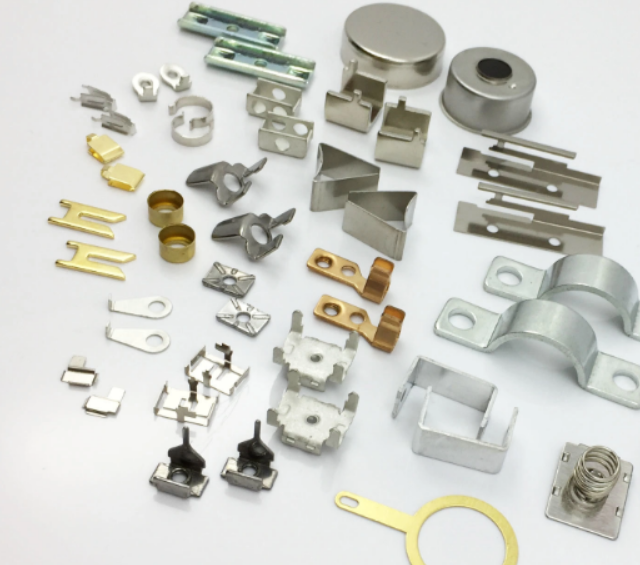
Metal stamping is a metal processing technology. By using stamping equipment and dies, pressure is applied to metal sheets to make them undergo plastic deformation or separation, so as to obtain parts with the required shapes and dimensions. The following is an introduction to metal stamping and related knowledge:
Process Principle
Metal stamping utilizes the power of equipment such as punch presses. The upper die and the lower die of the die are closed, and an external force is applied to the metal sheet placed between them. Under the action of pressure, the sheet metal undergoes plastic deformation according to the shape of the die, such as bending, stretching, flanging, etc., or separation occurs at specific parts to form punched parts.
Stamping Equipment
Punch Press: It is the main equipment for metal stamping and is divided into mechanical punch presses and hydraulic punch presses. The mechanical punch press converts the rotational motion of the motor into the up-and-down reciprocating motion of the slider through the crank-link mechanism. It has a high stamping speed and production efficiency and is suitable for small and medium batch production. The hydraulic punch press uses the hydraulic system to generate pressure, and it has the advantages of large pressure, stable movement, low noise, etc., and is often used for stamping large parts or high-precision parts.
Press: It is also a commonly used stamping equipment, which can provide a large amount of pressure to ensure the smooth progress of the stamping process. According to different structures and working principles, presses can be divided into open presses, closed presses, etc.
Stamping Dies
Types: According to the nature of the process, stamping dies can be divided into blanking dies, bending dies, drawing dies, forming dies, etc. Blanking dies are used to separate the sheet metal into the required shape and size; bending dies are used to make the sheet metal bend and deform; drawing dies are used to draw flat blanks into hollow parts; forming dies are used to complete the forming processes of various complex shapes.
Structure: It is generally composed of two parts, the upper die and the lower die. The upper die is installed on the slider of the punch press through the die shank and moves up and down with the slider; the lower die is fixed on the workbench of the punch press. The die also includes guiding parts, positioning parts, stripper parts, etc., to ensure the accuracy and stability of the stamping process.
Characteristics of Metal Stamping Parts
High Precision: Through the rational design of dies and precise control of the stamping process, parts with high precision can be obtained, and the dimensional tolerance can be controlled within a relatively small range.
High Efficiency: The stamping process can achieve automated production. With a fast production speed, it can mass-produce the same parts in a short period of time, improving production efficiency.
Low Cost: For parts produced in large quantities, the cost of the stamping process is relatively low. Once the die is manufactured, in the subsequent production process, the processing cost of each part mainly consists of the material cost and the operating cost of the equipment, and the cost allocated to each part is relatively small.
Ability to Process Complex Shapes: It can process parts with various complex shapes, such as automotive body panels, casings of electronic devices, etc., meeting the needs of different industries.
Application Fields
Automobile Manufacturing: It is used for producing automotive body structural parts, engine components, interior parts, etc., such as car doors, engine cylinder blocks, seat frames, etc.
Electronics and Electrical Appliances: Manufacturing casings of electronic devices, radiators, connectors, etc., such as mobile phone casings, computer cases, transformer cores, etc.
Hardware Products: Producing various hardware tools, furniture fittings, daily-use hardware, etc., such as wrenches, hinges, locks, etc.
Aerospace: Processing high-precision components of aircraft, such as wings, fuselage structural parts, engine blades, etc.
Process Development Trends
Automation and Intelligence: With the development of industrial automation technology, the metal stamping industry is increasingly adopting automated production lines and robotic technologies. Automated stamping production lines can achieve full-process automation from sheet metal loading, stamping processing to finished product unloading, improving production efficiency and product quality, and reducing labor costs and labor intensity. At the same time, the application of intelligent technologies is also becoming increasingly widespread. For example, parameters during the stamping process are monitored in real time through sensors, and artificial intelligence algorithms are used to analyze and process the data to achieve automatic optimization of the stamping process and fault diagnosis.
High Precision and High Performance: As the quality requirements for metal stamping parts in various industries continue to increase, the stamping process is developing towards high precision and high performance. This requires higher precision in die manufacturing, better precision and stability of stamping equipment, and the adoption of advanced stamping processes and materials to meet the strict requirements for part precision, strength, and surface quality in high-end fields such as aerospace, automotive, and electronics.
Green and Environmentally Friendly: Against the backdrop of increasingly strict environmental protection policies, the metal stamping industry is also actively promoting the concept of green manufacturing. On the one hand, by optimizing the stamping process, material waste and energy consumption are reduced; on the other hand, environmentally friendly stamping oils, cleaning agents and other auxiliary materials are used to reduce environmental pollution. In addition, waste materials and scraps generated during the stamping process are recycled to achieve the recycling of resources.
Latest News
-
-
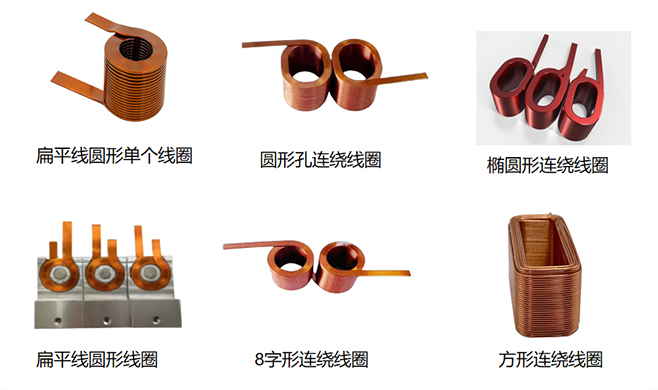
Understand flat coils.
A flat coil is an electrom...
-
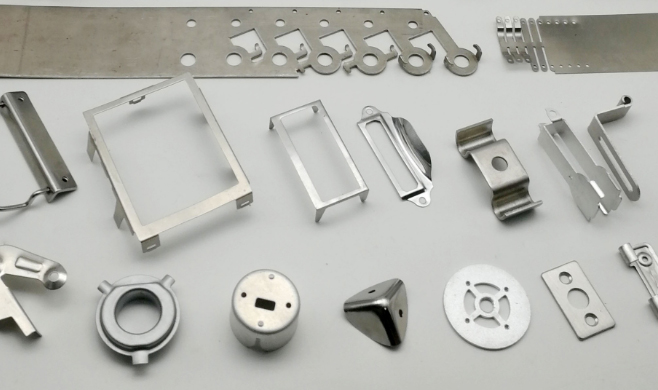
Introduction to Metal Stamping and Related Knowledge
Metal stamping is a metal ...